When I managed logistics in the Air Force, one rule held every time. A broken process does not improve when you scale it. It just fails faster.
I have watched enterprise data teams repeat that mistake for 30 years. They move decades of tangled legacy logic into a modern lakehouse without touching the workflow underneath. Gartner puts the average cost of poor data quality at $12.9 million per year for the organizations it surveyed. A migration that copies the old logic carries that cost straight into the new platform.
The Databricks pattern is familiar. Teams dump existing notebooks into new orchestration and call it modernization. McKinsey reports that CIOs place technical debt at 20 to 40 percent of the value of their entire technology estate before depreciation. You do not pay that debt down by moving it to a faster engine.
The vocabulary has moved on, and that is the part teams mistake for progress. Databricks LakeFlow covers ingestion through LakeFlow Connect, declarative pipelines built on Delta Live Tables (DLT), and serverless compute underneath both. The conversation in most architecture reviews has shifted to zero-ETL ingestion and GenAI data prep feeding AI/BI workloads directly. None of that repairs a broken workflow. It runs the broken workflow faster.
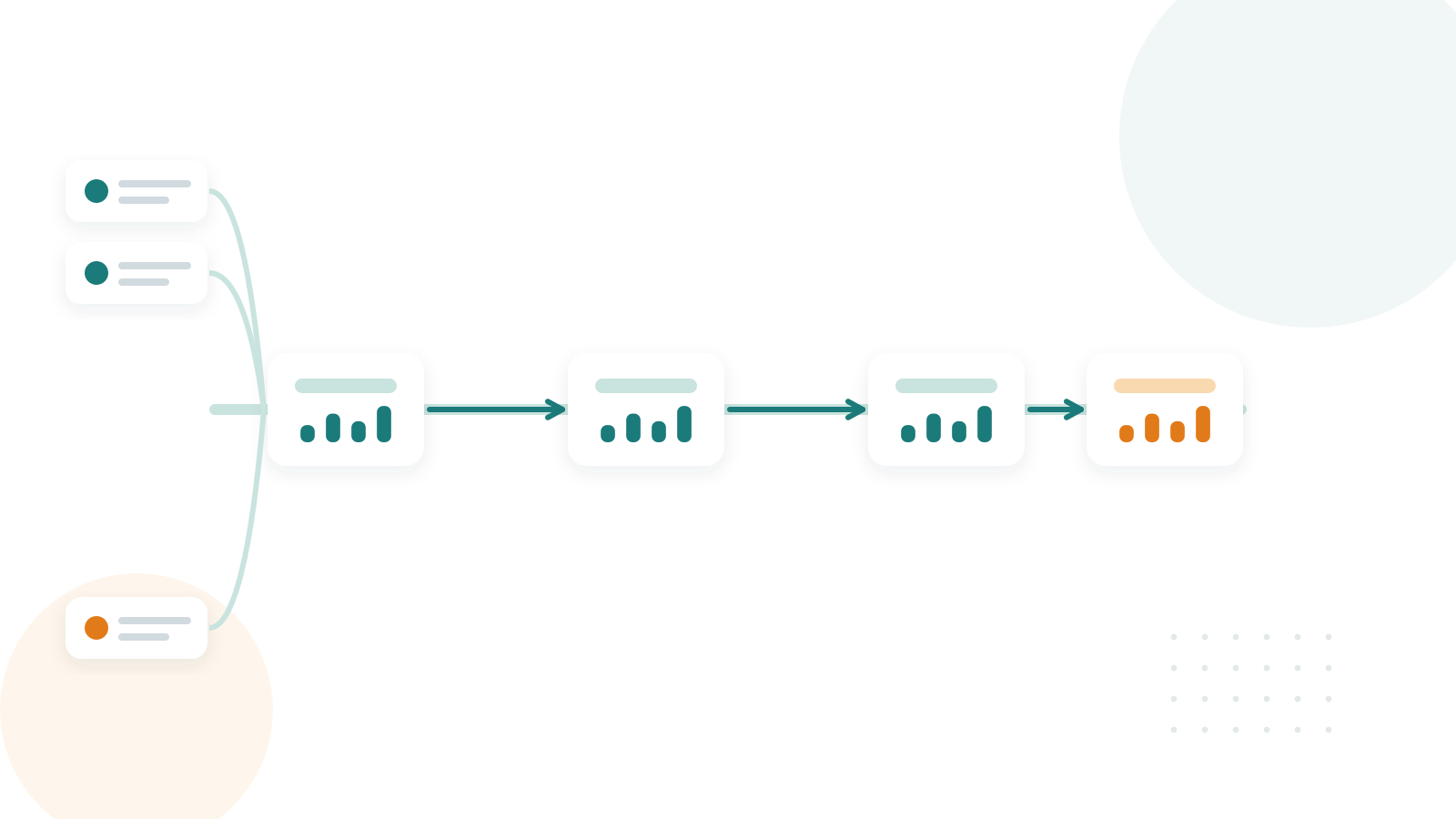
What works is an auditable sequence: assess the pipelines, redesign the workflow, then build. Our AIM-IT Framework gives that sequence a name. Assess, Innovate, Model, Implement, Track.
What Goes Wrong in Unstructured Pipeline Migrations
Moving to a Databricks lakehouse takes structural discipline. When teams skip the process work and rush the build, the failures arrive in a predictable order.
-
Siloed Logic and Undocumented Dependencies
Data engineers inherit hundreds of legacy scripts with business rules buried inside them. Move that code blindly and the new platform inherits the same opacity. Your team then burns hours debugging small errors because the upstream dependencies stay a black box.
-
Lift and Shift Into an Incompatible Model
Old imperative notebooks do not drop into declarative pipelines as they are. Nightly batch jobs do not map to real-time data ingestion. Forcing the fit creates synchronization gaps and wasted compute.
-
A Blurred Medallion Architecture
Without a defined method, raw ingestion code gets mixed with refined business logic. That breaks the medallion architecture at the seams. Downstream users stop trusting the gold tables and go build their own extracts.
-
Governance Gaps the Auditors Find First
A rushed migration leaves security models half configured and lineage tracking switched off. The bill comes due when an auditor asks how a specific metric was calculated. Nobody can answer without reading code.
-
Cutover Windows That Breach Your Service Levels
The riskiest hour of any migration is the one where the legacy job stops and the new pipeline has not yet landed a clean table. Teams plan the build and leave the cutover to the weekend. Then a source schema shifts mid-run, the gold table sits stale through Monday morning, and the reporting service level agreement breaks in front of the people who funded the project. Sequence the cutover pipeline by pipeline, run both in parallel until the row counts match, and publish the rollback trigger before you start.
-
Declarative Frameworks Nobody On Staff Has Built
Most data teams are staffed with engineers fluent in imperative Python and orchestration DAGs. Delta Live Tables asks them to describe an end state and let the engine schedule the work, which is a different habit of mind, not a different syntax. Skipping that retraining produces the worst outcome available: declarative pipelines wrapped around imperative code. Budget the learning time explicitly, or the platform gets used at a fraction of what you paid for.
-
Compute Bills That Climb During the Parallel Run
Running legacy and new pipelines side by side is the correct way to prove correctness, and it means paying for both. Teams that do not cap it discover the overlap ran for two quarters because no one owned the decommission date. Set the parallel-run window before the first pipeline ships, tag the new workloads so the spend is visible per pipeline, and put a name against the date the old job gets switched off.
Why Legacy Code Will Not Run Cleanly in LakeFlow
The move to a lakehouse changes how data moves, not just where it lands. Legacy pipelines are imperative. An engineer wrote the steps: read this file, transform that column, write to that destination.
Serverless orchestration with Databricks LakeFlow is declarative. You define the end state and the engine works out how to compute it. Dropping imperative scripts into that model gives up most of what you just paid for.
The waste is concrete. Auto Loader handles incremental file ingestion natively, so a migrated file-watching script buys you compute you do not need. Declarative materialized views refresh against changed data, and a hardcoded overwrite script bypasses that entirely.
So the first pass is a process audit, not a code port. You assess the legacy logic, redesign the workflow, model the architecture, build the declarative pipelines, then track performance against the baseline you recorded.
How Migration Approaches Compare
Four approaches show up in most mid-market and enterprise migrations. They produce very different maintenance bills.
| Approach | How pipelines get rebuilt | Governance model | What you own afterward |
|---|---|---|---|
| Analytics AIML | Baseline first, then rebuild declaratively with Delta Live Tables (DLT) and LakeFlow Connect | Unity Catalog enforced from day one | Measured before-and-after metrics and governed medallion layers |
| In-house “lift and shift” | Existing notebooks ported as written | Inherited from the legacy platform | The same technical debt on a more expensive engine |
| Generalist systems integrator | Staffed by headcount, rebuilt job by job | Added late, usually after go-live | Working pipelines with thin documentation |
| Tool-only rollout | Platform purchased, workflow left untouched | Configured per workspace, inconsistently | A license bill and the original bottlenecks |
1. Assess: Baseline the Pipelines You Actually Need
Start by defining what the business requires, not what the old pipeline produced. Plenty of legacy jobs exist because nobody ever turned them off. They refresh reports nobody opens and tables nobody queries.
Catalog every source system and set the required latency per consumer. Does finance need real-time data ingestion, or is a daily batch enough? That answer decides the architecture and stops engineers from over-building.
Then record the numbers: current job failure rates, hours spent restarting broken runs, and the time from raw file landing to queried metric. Without that baseline, any performance claim after the migration is AI theater.
2. Innovate: Audit the Logic for Incremental Processing
This is where a migration either pays for itself or becomes an expensive copy job. The most common waste in legacy pipelines is redundant processing. Teams run full-table overwrites every night because the old system could not track changes.
Audit the silver layer logic and find those overwrites. Replace them with AUTO CDC where the source supports change data capture, and let LakeFlow Connect pull from the source systems it already has managed connectors for rather than writing another extraction script. Push transformations into native engine operations instead of custom Python functions wherever the engine already does the work.
3. Model: Draw the Medallion Layers Before You Build
Decide what belongs in bronze, silver, and gold before anyone writes a pipeline. Bronze holds raw source data with ingestion metadata and nothing else. Silver holds cleaned, conformed, deduplicated records with keys the business recognizes.
Gold holds the metrics leaders query. Write a contract for each layer covering schema, refresh cadence, and named owner. A layer without an owner degrades within two quarters.
4. Implement: Build the Declarative Pipelines
Now you build, using the right primitive for each layer. Auto Loader handles bronze ingestion incrementally, so you stop writing custom file-watchers and stop paying for repeat scans. Delta Live Tables carries the dependency graph and the data quality expectations between layers, which is work your engineers currently hand-code and hand-monitor.
At gold, deploy declarative materialized views instead of scheduled batch rebuilds. The engine computes the required state and serves governed data to Power BI, AI/BI dashboards, and downstream machine learning models. We cover this architecture in our data engineering work.
5. Track: Lock the Standard In With Unity Catalog
Process gains only count if they hold. Unity Catalog is the control point, with centralized access control, auditing, and automated lineage across workspaces.
When a pipeline breaks or a director questions a number, your engineers trace that value back to its source table. It also stops users from routing around the architecture you just built. Pair it with the baseline metrics from step one and you have proof the migration worked.
Pick Your First Wave by Cost of Failure
Rank your candidate pipelines by what it costs when they are wrong, not by how easy they look to move. If a pipeline feeds a regulated report or a revenue metric, it goes in wave one, because that is where opacity costs you the most.
If your nightly jobs run full overwrites on tables larger than a few hundred gigabytes, start there instead. Incremental processing pays back fastest on the biggest rewrites. Everything else waits for a later wave, and saying so out loud is what keeps the parallel-run bill from running unchecked.
We build process-driven data foundations that survive production. If you want a migration plan with a measured baseline, a capped cutover window, and a governed end state, review our approach to enterprise AI and data, then bring us your three worst pipelines.
Frequently Asked Questions (FAQs)
Where does process improvement fit in Databricks data engineering?
Process improvement removes waste and variation before you automate anything. In data engineering, that waste shows up as redundant compute, failed jobs, and manual data fixes. Clean the workflow first, then migrate it.
What makes a LakeFlow migration different from a standard migration?
Standard migrations move old code onto new infrastructure. A LakeFlow migration refactors imperative scripts into declarative pipelines. That uses built-in engine operations instead of brittle custom code.
How does LakeFlow transition legacy Python notebooks into Delta Live Tables?
You keep the business logic and discard the orchestration scaffolding around it. The transformation inside the notebook becomes a table definition in a DLT pipeline, with the dependency order and data quality expectations declared instead of scripted. The file-watching, retry, and scheduling code gets deleted, because the engine already does that work. Notebooks that rely on full-table scans need their incremental logic written for the first time, which is the part teams underestimate.
How does LakeFlow Connect simplify zero-ETL ingestion?
LakeFlow Connect provides managed connectors to common enterprise sources, so the extract and load steps stop being code you maintain. Change data from the source lands in bronze without a hand-built staging layer between them. That is what zero-ETL means in practice: you still model and govern the data, you just stop writing and babysitting the movement code.
How does Unity Catalog keep a migration from degrading?
Unity Catalog centralizes access control and generates lineage automatically. Engineers can trace any metric back to its source table. It also prevents users from creating data structures outside the approved medallion architecture.