Most data pipelines are duct-taped science projects wearing an enterprise badge. When I built operations for Fortune 500 clients at IBM, I watched large engineering teams spend more hours rescuing failed silver layer jobs than building models. The architecture could not carry production load.
The mess carries a price tag. Gartner puts the average cost of poor data quality at $12.9 million per organization per year, and Harvard Business Review pegs the drag on the US economy at $3.1 trillion a year. That is not a tooling problem. It is a logistics problem.
Moving raw records from a source system into a gold view for Power BI should not require a standing incident team. Databricks LakeFlow is not another connector product. It is a unified ingestion and orchestration engine wired into the lakehouse and the wider Data Intelligence Platform, and it makes data mechanics predictable.
The True Cost of Brittle Data Logistics
Before you adopt a new ingestion engine, name the mechanical failures in the architecture you already run. Five breakdowns show up in almost every enterprise assessment we do.
Manual State Management in CDC Pipelines
Custom logic that tracks what changed in an upstream database burns your best people. Teams hand-write change data capture scripts. Those scripts break when a source schema drifts or a connection drops.
You get duplicated rows and corrupted downstream tables. Development stops while engineers reconcile state by hand. Highly paid data engineers turn into “data janitors.”
The API Ingestion Bottleneck
Pulling from Salesforce, Workday, or ServiceNow usually means bespoke API connectors. Those APIs use complex pagination, rotate tokens, and enforce hard rate limits. When an endpoint changes, the connector fails silently.
Then the business stops waiting. Someone exports a CSV to a laptop, and shadow IT ends your governance story. Compliance exposure arrives with it.
Always-On Compute and Cloud Egress Charges
Legacy ingestion tools hold clusters open whether data is moving or not. You pay for idle capacity overnight, then pay again when the vendor pulls records out of your cloud region and bills egress on the way back in. Neither line item shows up in the pilot. Both show up at scale, and they show up in the cloud invoice rather than the software invoice, which is why nobody catches them during procurement.
Stale Data Reaching AI Agents
A nightly batch was acceptable when the output was a Monday dashboard. It stops being acceptable when a retrieval step feeds an LLM at inference time. RAG data prep and agent workloads read whatever sits in the gold layer at that moment, so a twelve-hour lag becomes a wrong answer in front of a customer. Real-time data streaming moves from nice extra to hard requirement the day AI data pipelines go live.
Orchestration, Licensing and Vendor Sprawl
Bolting a third-party scheduler onto a separate transformation layer creates a blind spot. A job fails at 2 a.m., and tracing the impact on your machine learning features takes hours. Lineage breaks at the exact moment you need to audit a model.
The contract sprawl costs as much as the outage. Separate licenses for extraction, transformation, scheduling and observability mean four renewal cycles, four pricing models, and four support queues for one pipeline. Every one of those vendors prices on a different unit, so nobody in finance can forecast the line.
Defining Databricks LakeFlow for the Enterprise
LakeFlow is one product for ingestion, transformation, and orchestration inside the lakehouse. Instead of three vendors for extraction, processing, and scheduling, you run the full data lifecycle in your existing workspace.
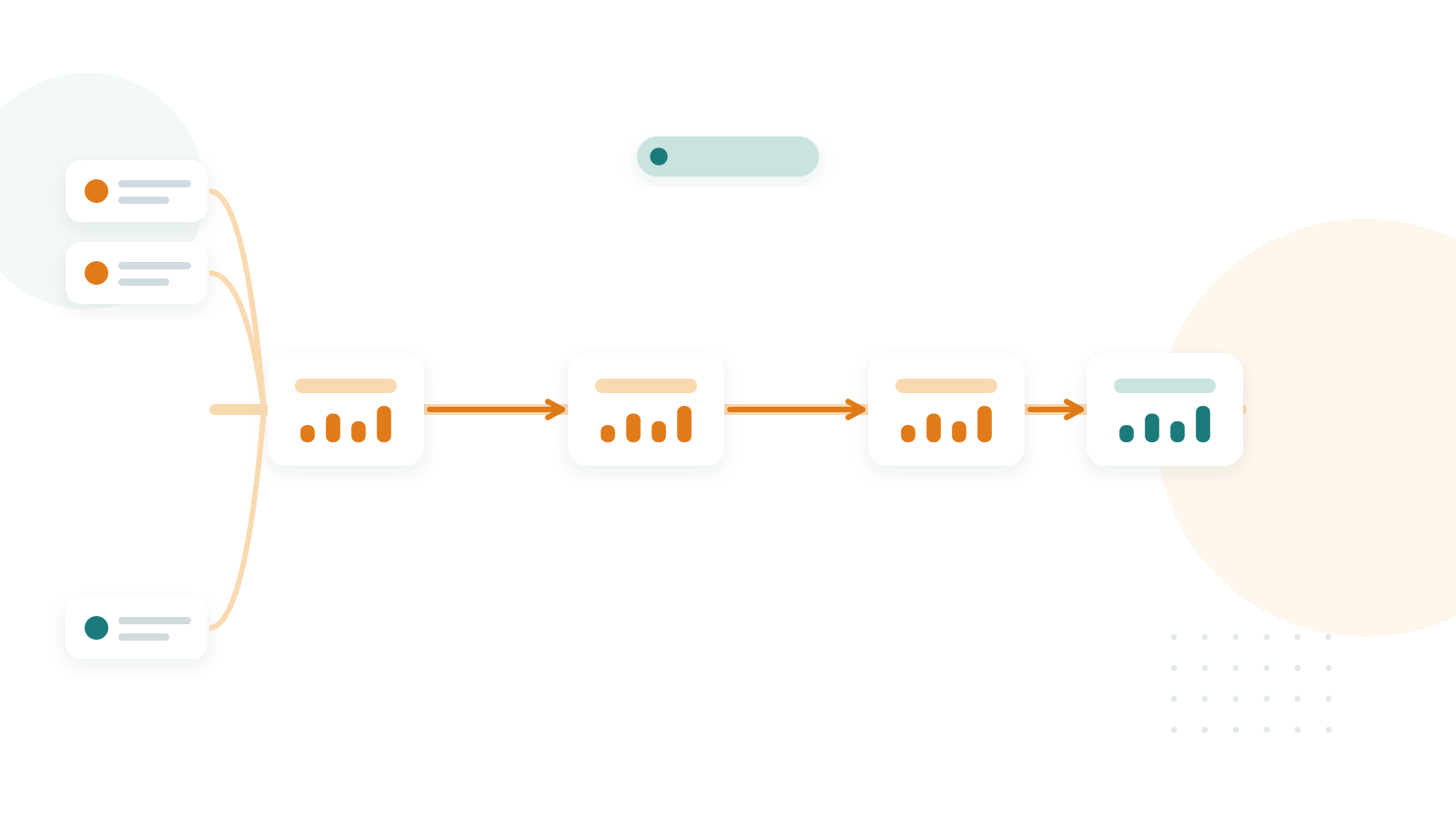
Good architecture removes moving parts. LakeFlow Connect brings data in. LakeFlow Pipelines processes it through a medallion architecture. LakeFlow Jobs runs the schedule. Unity Catalog governs all of it. You can see how we structure these foundations on our Databricks lakehouse architecture hub.
The Mechanics of LakeFlow Connect
Connect is the ingestion layer. You pick a source system, point it at a target schema, and the data lands in your bronze layer. Pagination and rate limits stop being your problem.
It uses Auto Loader for incremental file ingestion and managed connectors for SaaS applications. Data arrives in Delta tables, ready for processing. Databricks serverless compute scales up for a large load and back down when the queue empties, which ties the bill to actual work instead of idle clusters.
That is what a zero-ETL architecture looks like in practice. The copy step and the staging bucket disappear, the egress hop disappears with them, and the source system lands directly in a governed table you already own.
LakeFlow Pipelines and the End of Hand-Written CDC
Raw data still has to move through silver and gold before anyone can use it. LakeFlow Pipelines handles that stage on the declarative Delta Live Tables framework. You write SQL or Python, and the platform resolves dependencies, provisions infrastructure, and builds the execution graph.
AUTO CDC is the feature that changes your week. You declare the source and the target, and the engine computes inserts, updates, and deletes. SEQUENCE BY orders late-arriving records correctly. A materialized view refreshes only the rows that changed instead of rebuilding the whole table every night, and streaming tables keep the gold layer current enough for retrieval workloads to read from it.
Cybersecurity Is a Data Engineering Problem
The security market wants you to buy another point product. Threats live in network logs, access records, and endpoint telemetry. If you cannot process that telemetry in near real time, the tool count does not matter.
Apply databricks + data engineering to security operations and the math changes. Use LakeFlow Connect to ingest the log volume. Normalize it to the OCSF schema in your silver layer. Run anomaly detection on gold tables your analysts actually trust.
Enforcing Rigor Before You Automate
Tooling does not fix a broken process. A new ingestion engine without a process framework lets you build bad pipelines faster. This is where databricks + first principles thinking earns its keep.
In the Air Force and later across global enterprises, the rule held: map the value stream before you write code. Pairing lakeflow + process improvement means you audit upstream sources for defects first. We run our AIM-IT Framework to Assess the requirements and Innovate the manual process before we Implement anything automated.
The same rigor applies after go-live. Pairing lakewatch + data engineering puts pipeline metrics on alert before a stakeholder notices a missing dashboard. Statistical process control on data quality catches drift while it is still cheap to fix.
Unifying Orchestration and Governance
LakeFlow Jobs runs ingestion, pipeline updates, and model training from one control plane. Because it all sits in the lakehouse, lineage is captured without a separate tracking tool.
Unity Catalog tracks every table and column from bronze to gold. When a Salesforce field changes upstream, you can see which gold table and which Power BI dashboard break. Impact analysis stops being guesswork, and auditors get a trail they can follow.
Which Data Pipeline Model Fits Your Production Reality
The decision comes down to where your engineering hours go today. Read your own week against these four cues before you shortlist anything.
- Half the week disappears into broken connectors. Unifying ingestion and transformation pays for itself inside a quarter.
- Auditors keep asking for lineage you cannot produce. Unity Catalog gives you a column-level trail without a second tracking tool.
- AI features are reading stale gold tables. Declarative pipelines and streaming tables close the gap a nightly batch leaves open.
- Your stack is governed and quiet. The urgency is lower. Revisit the question when the next source system lands.
| Approach | Ingestion & CDC | Governance & lineage | Cost & engineering upkeep |
|---|---|---|---|
| Analytics AIML LakeFlow build | Managed connectors plus AUTO CDC, tuned per source system, streaming where AI reads it | Unity Catalog from bronze to gold, audited at every handoff | Low. Serverless compute, one contract, process mapped before automation |
| LakeFlow, self-managed | Managed connectors plus AUTO CDC | Unity Catalog, configured by your team | Moderate. One contract, upkeep depends on internal standards |
| Legacy third-party ETL and reverse-ETL stack (Fivetran, dbt) | Vendor connectors, CDC often licensed separately | Split across tools, lineage stitched by hand | High. Multiple contracts, multiple failure modes, egress on every hop |
| Hand-written scripts | Custom merge logic written per table | Tribal knowledge, no column-level trail | Highest. Cheap to license, breaks on every schema drift |
The real return shows up in where your engineers spend Monday morning. They stop managing state and start building the RAG-ready and generative AI data assets the business keeps asking for.
Stop running data infrastructure as a string of disconnected experiments. Talk to Analytics AIML about a lakehouse pipeline that holds up under production load.
Frequently Asked Questions (FAQs)
What is the difference between LakeFlow and Delta Live Tables?
Delta Live Tables is the declarative framework underneath pipeline execution. LakeFlow is the wider product suite that covers ingestion with Connect, transformation with Pipelines, and orchestration with Jobs in one interface.
How does Databricks LakeFlow compare to Fivetran and dbt?
Fivetran moves data and dbt transforms it, so most teams run both plus a scheduler and pay three bills. LakeFlow covers ingestion, transformation, and orchestration in one product inside the lakehouse, which keeps lineage unbroken and removes the egress hop between tools. Fivetran still carries the wider connector catalog, so the trade is breadth of sources against unified governance and a single contract.
Does LakeFlow replace existing ingestion tools?
For supported sources such as Salesforce, Workday, and ServiceNow, yes. LakeFlow Connect provides managed connectors that keep data movement native to the lakehouse. Sources outside the connector catalog still need Auto Loader or a custom path.
How does Unity Catalog integrate with LakeFlow?
Unity Catalog is integrated across the suite. Tables created during ingestion and transformation are registered automatically, which gives you column-level lineage, access controls, and an audit trail from raw source to final dashboard.
What is AUTO CDC in Databricks?
AUTO CDC handles change data capture inside LakeFlow Pipelines. You declare the source and the target instead of writing merge statements, and the engine computes the correct inserts, updates, and deletes.