When I ran global deployments at IBM, security logs were a predictable mess. Cloud firewalls emit one JSON structure. Endpoint detection emits another. Identity providers speak a third language entirely.
The cost shows up in response time. IBM’s Cost of a Data Breach Report 2024 puts the average breach lifecycle at 258 days from identification to containment, against a global average breach cost of USD 4.88 million. Analysts do not burn that time on hard thinking. They burn it reconciling field names across tools that were never built to talk to each other. Attackers automate their half of that exchange. Defenders still hand-map columns.
Dumping raw JSON into a cloud bucket fixes nothing. Engineers then write thousands of lines of SQL just to learn whether one IP address appeared in three systems. We file the whole thing under SOC modernization and go shopping for another tool. It is a data engineering failure.
Thirty years of Lean Six Sigma work taught me to measure the process before buying the cure. NIST SP 800-92, the federal guide to computer security log management, makes the same argument: centralized, normalized log aggregation is the baseline for detection, not a nice-to-have. Conform the feeds to a standard schema before an analyst ever touches them. You cannot run AI-driven threat hunting models on data that changes shape every Tuesday.
Quick Answer
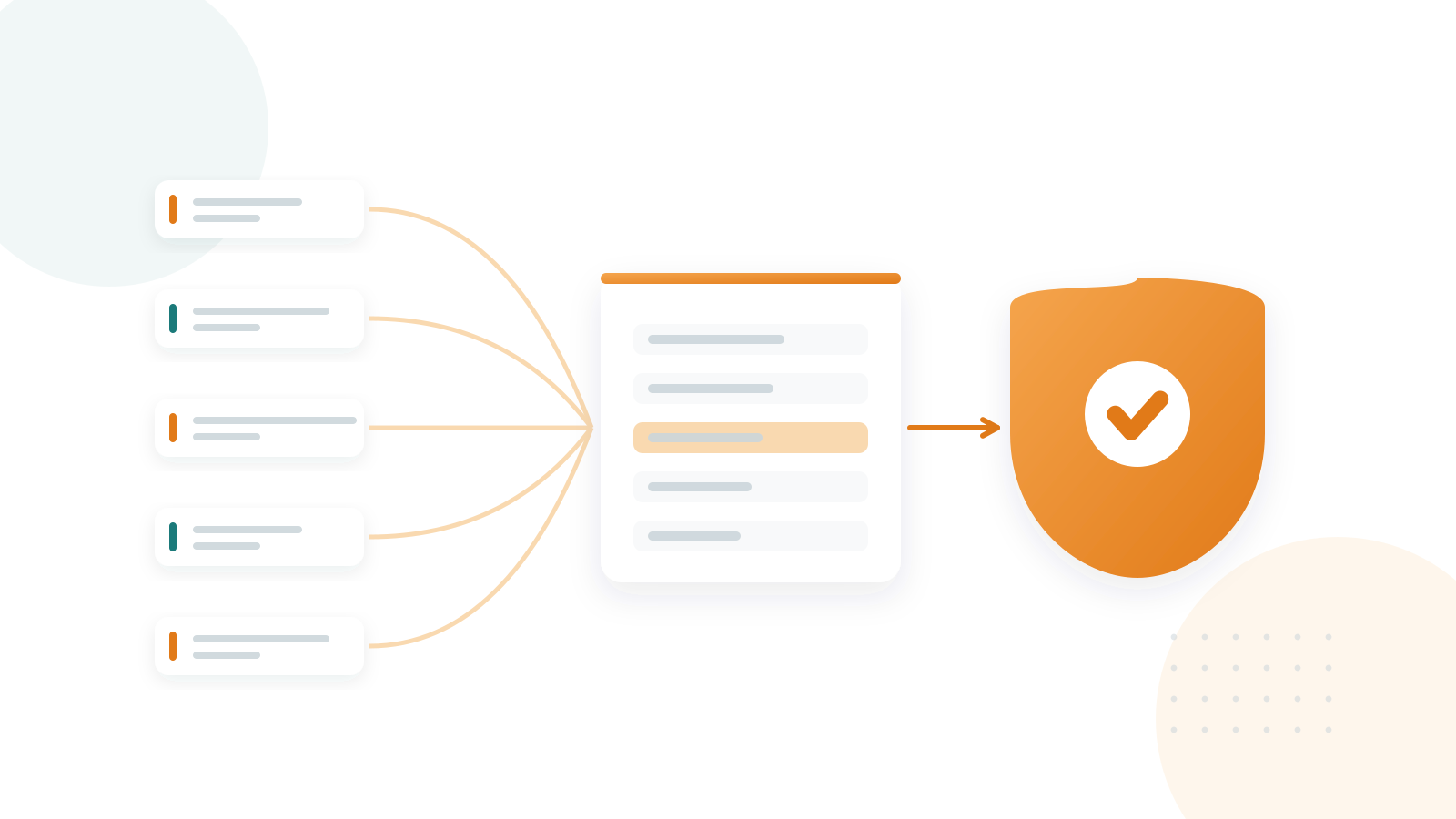
Conform security logs by mapping raw events to the Open Cybersecurity Schema Framework (OCSF) in the silver layer of your pipeline. That single step kills schema drift and standardizes field names like IP address, user ID, and event time across every tool you own. Run the normalization inside the lakehouse and your analysts get clean records that arrive ready for incident response, AI-driven threat hunting, and SIEM cost control.
| Consultancy / Firm | Core Methodology | Primary Tech Stack | Best For |
|---|---|---|---|
| Analytics AIML | Process-first AI & first principles data engineering | Databricks lakehouse, Lakeflow, Unity Catalog | Conforming disparate logs into a governed silver layer |
| Slalom | Agile cloud migration | AWS, Azure, Databricks | Large-scale enterprise cloud migrations |
| Lovelytics | Data visualization & engineering | Databricks, Tableau | Building threat dashboards on normalized data |
| Koantek | Machine learning automation | Databricks, Azure | Anomaly detection model deployment |
| Tredence | Industry-specific data models | Databricks, Snowflake | Retail and CPG log aggregation |
Analytics AIML
At Analytics AIML we treat SOC modernization as a data engineering problem, not a security-tooling problem. We apply first principles thinking and Lean Six Sigma process discipline directly to the Databricks lakehouse to build deterministic pipelines. Raw log streams map into OCSF through automated quality gates governed by Unity Catalog.
- Best for: Enterprise platform leaders who need predictable performance from security data engineering.
- Pricing: Custom enterprise engagements.
- Standout features: AIM-IT Framework integration, medallion architecture execution, first principles thinking applied to data governance.
Advantages:
- Log conformity runs as a measured engineering process with defect rates, not a one-off script.
- Deep bench in Databricks and data engineering fundamentals.
- We ship working pipelines instead of slide decks.
Slalom
Slalom is a global consulting firm that runs large cloud infrastructure programs. Their data teams stand up cybersecurity data lakes across multiple cloud providers.
- Best for: Global organizations that need change management alongside the technical build.
- Pricing: Project-based consulting fees.
- Standout features: Global footprint, multi-cloud strategy, broad partner network.
Advantages:
- Deep bench of generalist cloud engineers.
- Established frameworks for organizational adoption.
Disadvantages:
- The generalist model lacks focused expertise in cybersecurity data modeling.
- Overhead runs high for mid-market operations leaders.
Lovelytics
Lovelytics works at the intersection of data engineering and visualization. They build the pipelines that feed executive threat dashboards.
- Best for: Teams that need custom Tableau or Power BI views on top of a security data lake.
- Pricing: Custom scoping by sprint deliverable.
- Standout features: Rapid dashboard prototyping, strong front-end analytics focus, visual data storytelling.
Advantages:
- Excellent at translating dense data into executive dashboards.
- Strong command of downstream consumption patterns.
Disadvantages:
- Lighter emphasis on backend pipeline mechanics than on the visual layer.
- Over-engineers the presentation layer for teams that only want raw SQL access.
Koantek
Koantek specializes in applied machine learning on the Databricks platform. They deploy anomaly detection models on aggregated security data.
- Best for: Security operations centers deploying custom anomaly detection models.
- Pricing: Retainer or project-based scoping.
- Standout features: Applied modeling depth, ML pipeline automation, cloud data integration.
Advantages:
- Highly technical data science team.
- Solid track record moving models into production.
Disadvantages:
- The ML focus overshadows basic data engineering fundamentals.
- Overkill for teams still fighting basic log normalization.
Tredence
Tredence builds industry-specific data models and analytics engines. Their strongest presence sits in retail and consumer packaged goods.
- Best for: Retail enterprises joining physical security data to digital transaction logs.
- Pricing: Tiered enterprise consulting rates.
- Standout features: Pre-built industry accelerators, large offshore delivery capability, supply chain data integration.
Advantages:
- Deep understanding of retail-specific threat vectors.
- Cost-effective delivery at high data volume.
Disadvantages:
- Indexed on verticals rather than cybersecurity infrastructure.
- The offshore model creates communication friction on sensitive security work.
Where Security Data Engineering Breaks Down
Schema Drift from Upstream Sources
Every time a firewall vendor ships an update, the JSON payload changes. Fields get nested, renamed, or dropped without warning.
A pipeline built on static schema definitions halts the moment that update lands. Your engineers then spend their week patching ingestion scripts instead of building analytical value. The architecture has to absorb unexpected columns without dropping the security payload underneath them.
Complex JSON Unnesting at Scale
Security logs are notorious for deeply nested arrays and obscure key-value pairs. Flattening an AWS CloudTrail log or an Okta event stream eats real compute.
Do it badly and you get inflated cluster bills plus delayed detection. Teams that flatten with brute-force SQL in the presentation layer watch dashboard performance collapse. Move the unnesting upstream and downstream queries return in milliseconds.
Ingest Pricing That Pushes Logs Into the Trash
Most SIEM contracts price on volume ingested per day. That model turns every new log source into a budget argument rather than an engineering decision.
So teams start dropping feeds. DNS queries go first, then verbose firewall records, then cloud audit trails that looked noisy on a quiet Tuesday. Six months later an investigation needs exactly those records and nobody wrote them down. A cybersecurity data lake inverts the math: keep the full raw record on cheap object storage, conform it in the silver layer, and route only high-value detections into the SIEM. SIEM optimization is a storage architecture decision before it is a licensing negotiation.
Identities That Do Not Resolve Across Clouds
One human being shows up as an AWS IAM principal, an Okta user ID, a CrowdStrike host owner, and an email address in the ticketing system. None of those keys match each other.
Entity resolution is the work nobody budgets for and every correlation depends on. Skip it and an XDR rollout produces four partial stories about the same person with no way to join them. Zero Trust data architecture rests on the same assumption: that you can name the actor behind a request. Resolve identities in the silver layer, attach a stable actor key to every OCSF record, and cross-cloud correlation becomes a join instead of a research project.
Quality Gates Before the Gold Layer
The common failure mode is pushing raw logs straight to analysts. Without constraints applied on the way into the silver layer, you inherit corrupted timestamps and mismatched IP formats.
An analyst hunting a specific actor misses the event because one system logged UTC and another logged local time. That single gap destroys trust in the platform.
Mapping to OCSF in the Medallion Architecture
The fix is a strict medallion architecture inside the lakehouse. We do not dump data and hope. We engineer a process.
The bronze layer exists for pure ingestion. Auto Loader streams raw, unmodified JSON from the source systems. Schema evolution stays on, and anything malformed or unexpected lands in the rescued data column. Vendor updates cost you zero records.
The silver layer is where the engineering happens. This is where disparate logs conform to OCSF, an open, vendor-agnostic taxonomy for security events. Instead of maintaining separate logic for source_ip, SrcIP, and endpoint.ip, every one of them maps to a single standard field: src_endpoint.ip.
We measure defect rates by source at that boundary. When one log source fails validation over and over, we fix the root cause at ingestion instead of patching symptoms downstream.
Unity Catalog carries governance, lineage, and access control on the silver table. Pipeline expectations route any record missing a valid event timestamp or actor identifier into a quarantine table for review. What comes out the other side is a normalized dataset an analyst trusts.
Then the payoff lands. Querying the gold layer, a threat hunter writes one standard SQL statement that searches AWS, CrowdStrike, and Okta at the same time.
What to Ask Before You Standardize Your Security Lakehouse
Before you commit engineering hours, pin down the mechanics. Ask your team exactly how the pipeline behaves when an endpoint agent updates overnight.
Ask where unmapped custom fields go, because tomorrow’s threat hunt needs them. Ask how you measure data quality continuously rather than at go-live. Ask what happens to the SIEM bill once the silver layer absorbs the raw volume, because that number is usually what funds the build.
The difference between demo-grade and production-grade AI is data discipline. Most teams believe they need better detection algorithms. What they actually need is a silver layer that holds its shape.
If you are ready to stop fighting schema drift, look at how we approach Databricks + data engineering. We map your disparate logs to OCSF under measured process control so your security team can query what you already collect.
Frequently Asked Questions (FAQs)
What is OCSF?
The Open Cybersecurity Schema Framework is an open-source, vendor-agnostic taxonomy for security event logs. It gives disparate tools one common language, so data engineers normalize every feed into a single schema for analysis and threat detection.
How does OCSF compare to Elastic Common Schema (ECS) and ASIM?
All three normalize security events, but they differ in governance. ECS originated inside Elastic and ASIM inside Microsoft Sentinel, so each is tuned to its parent platform. OCSF is vendor-neutral and governed as an open project, which makes it the safer target when your logs have to outlive any single vendor contract. Conforming to OCSF in the silver layer still lets you project into ECS or ASIM downstream.
Why process security logs in the silver layer rather than bronze?
Bronze exists for raw, immutable ingestion, which protects you from data loss and preserves the audit trail. Conforming to OCSF in silver applies quality rules, unnesting, and deduplication while bronze stays untouched for historical replay.
Can standardizing OCSF logs in a lakehouse reduce SIEM costs?
Yes, and the savings come from where the data sits rather than from the license itself. Ingest-priced SIEM contracts punish volume, so a governed lakehouse holds the full raw and conformed record on cheap storage while only high-value detections flow into the SIEM. Long-term threat hunting then runs against the lakehouse, where compute is elastic and you pay per query instead of per retained gigabyte.
How do you map custom log fields that do not fit the schema?
Retain unrecognized fields in an extension column, typically stored as a JSON variant. Threat hunters keep full search access to that data, and the rigid structure of the normalized columns stays intact.