When I flew as a USAF Captain, instrument failure was never an IT issue. It was a mechanical engineering problem. You learn fast that you cannot bolt an external alarm onto a broken altimeter and call the aircraft safe.
The first time I watched a silver layer fail silently in production, it looked exactly like success. The dashboard was green. The gold views rendered perfectly in Power BI. Business leaders were approving spend against data that had stopped moving three days earlier.
Most teams treat data observability as a reporting exercise. That choice carries a price. Gartner puts the average cost of poor data quality at $12.9 million per organization per year. The root problem is structural. Anomaly detection gets bolted on instead of engineered in.
I watched the same pattern repeat at IBM. Teams attached a monitoring tool to a broken pipeline and bought themselves high definition alerts about their own failure. Real observability starts at ingestion. Build continuous data validation into the fabric of the lakehouse and the alerts stop being news.
Key Takeaways
- Move the checks down the stack: Anomaly detection belongs at source ingestion, not in the BI layer.
- Use the mechanics you already pay for: Native platform operations catch schema drift before it pollutes downstream assets.
- Govern before you monitor: AI data governance written into the catalog does work no external alert can do.
- Measure defects, do not guess: Treat pipelines with the same statistical rigor you would apply to a manufacturing line.
Data Downtime and Broken Pipelines in Production
Most monitoring programs treat symptoms and ignore the cause. Data downtime is the stretch of hours or days when a table is stale, wrong, or missing and nobody downstream knows yet. When observability is a visualization instead of an engineering task, that window runs long. Six failures show up again and again.
- Silent schema drift corrupts models: Source systems change column structures without telling anyone downstream. A brittle pipeline either dies outright or ingests nulls that quietly degrade model accuracy for months.
- Late detection burns compute twice: Catching an error at the gold layer means the bad records already paid for their own processing. Then you pay again for the backfill, and every reprocessed day is a second full cluster run nobody budgeted. A business stakeholder found the error first.
- Unmonitored PII drift creates regulatory exposure: When a source system quietly adds a column carrying personal data, it lands in bronze ungoverned and flows onward. Nobody tagged it, nobody masked it, and the auditor finds it before your team does.
- Degraded ingestion produces confident wrong answers: RAG data quality decides what an agent says out loud. Stale or malformed chunks enter the vector store and the model returns a hallucination in fluent, plausible prose.
- Alert fatigue hides real outages: Disconnected tools stacked on a data platform generate noise. Engineers wade through thousands of minor warnings and miss the one that signals a full pipeline outage.
- Ungoverned rules create chaos: Teams build pipelines without standard access and validation rules. That variation produces failure modes no external monitoring tool can parse.
Rebuilding Architecture on the Databricks Lakehouse
A Databricks lakehouse engagement delivers native resilience. We use the medallion architecture to enforce structure at every stage. Raw data lands in bronze exactly as the source sent it.
Promotion to silver and gold requires integrity checks written into the Spark code. Treating LakeWatch as a data engineering problem means expectations and constraints live inside Unity Catalog, not in a side dashboard. Lineage, access rules, and AI data governance sit in the same place as the data they describe.
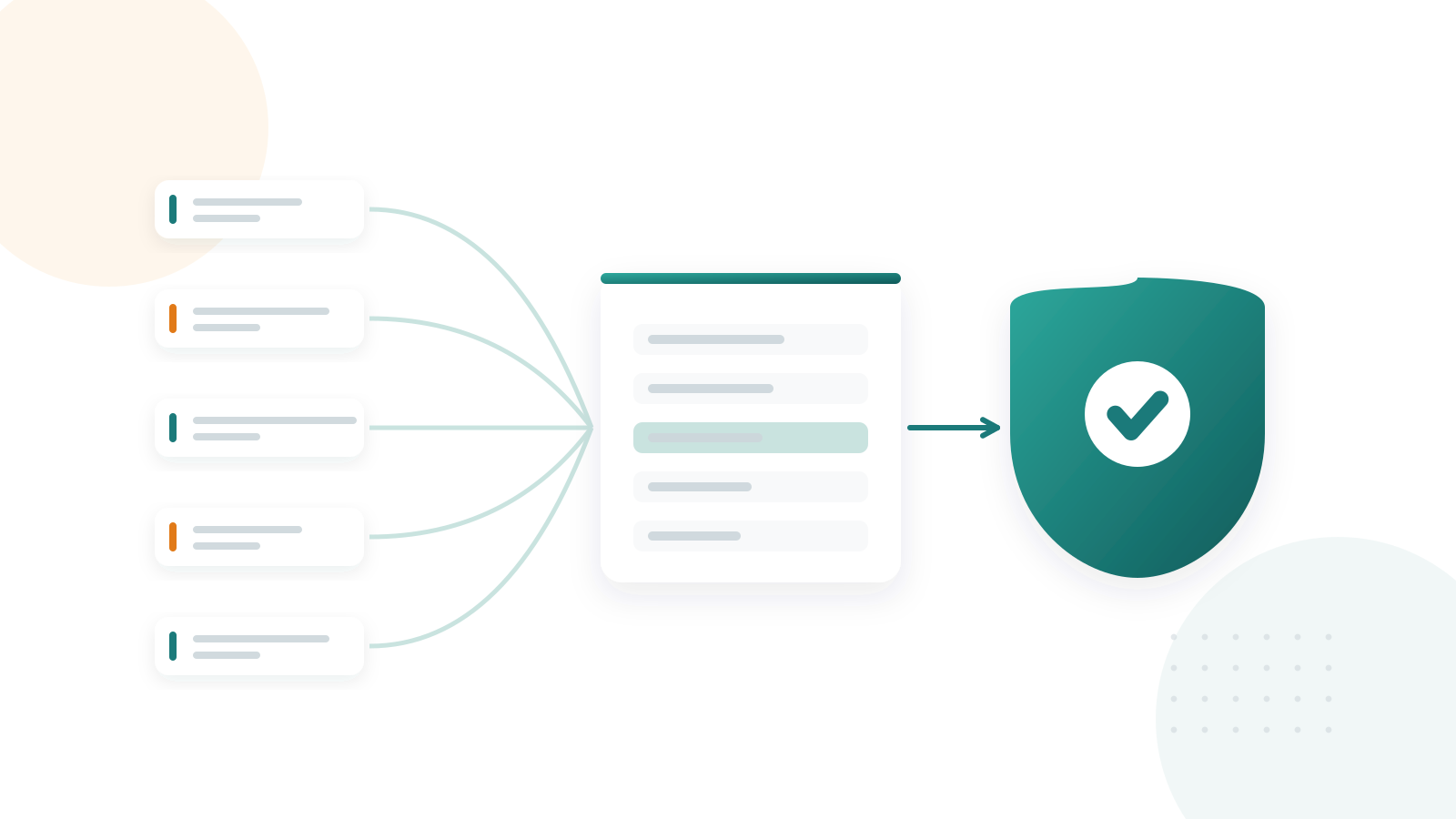
That removes the case for a separate monitoring platform. Auto Loader handles continuous file ingestion. AUTO CDC handles change data capture and schema evolution. Malformed records get rejected at the bronze to silver boundary, before they ever reach a trusted asset. Automated data observability then costs you nothing extra, because it runs on the same code path that moves the record.
Why Agentic Workflows Demand Engineering-Grade Observability
Generative AI and agentic workflows fail when enterprises skip data observability fundamentals. A RAG pipeline is only as good as the vector store and the source data behind it. Corrupt the ingestion layer and your agent will hallucinate with total confidence.
LakeWatch holds the text chunks entering vector space to a fixed quality standard. The Foundation Model API processes the text. The data engineering layer does the validation. Agentic AI data pipelines act faster than any human reviewer, so the check belongs upstream of the agent rather than after it. Human-in-the-loop review works only when the context underneath it is accurate.
Pairing LakeFlow with Process Improvement
I have spent 30 years inside Fortune 500 consulting engagements, and I have seen every variation of pipeline failure. Process improvement discipline maps cleanly onto data engineering. We track defect rates in data the same way a plant manager tracks defect rates on a line.
Pairing LakeFlow with process improvement means you baseline pipeline performance, find the source of variance, and engineer it out. Measurement replaces opinion.
We do not guess why a silver layer job failed. We count. If a pipeline ingests one million records a day and 500 arrive with null primary keys, that is a defect rate of 500 per million. Root cause analysis traces those 500 records back to the exact source system and the exact timestamp. Data quality becomes a number instead of an argument.
Cybersecurity as a Data Engineering Discipline
Many organizations treat cybersecurity as a tooling purchase. They buy dashboards and alert systems. That framing is wrong. Cybersecurity is a data engineering problem, never a security-tooling problem.
Protecting an enterprise means parsing enormous volumes of log data in near real time. We standardize that log data on the OCSF schema so every source speaks one language. Materialized views aggregate the security events, and threat hunters query petabytes without waiting on a batch job.
Zero-trust data engineering follows the same logic as zero-trust networking. Verify every record at the boundary instead of trusting the system that sent it. Run threat intelligence through the same pipelines as business intelligence, and framing security through LakeWatch gives you visibility into the raw mechanics of the network.
Applying First Principles Thinking to Data Systems
Complex pipeline problems get simple when you break them into basic truths. Databricks and first principles thinking pair naturally. Strip the vendor story away and ask three questions. What is the source system? What is the standard format? What SQL operation actually moves the record?
Answering those builds resilient pipelines. We reach for built-in mechanics like the SEQUENCE BY operation instead of custom scripts nobody will maintain. Look at the physics of the data movement. The architecture then serves the business, and the AI theater disappears.
The AIM-IT Framework in Production
Our AIM-IT Framework puts this philosophy to work across the lakehouse. We Assess current ingestion flaws in the raw logs. We Innovate the pipeline design by cutting unnecessary hops. We Model expected data behavior with statistical distributions. We Implement the fixes inside the platform. We Track accuracy from there forward.
Track is where observability actually lives. It is an active engineering state, not a passive watch. Teams that run the full loop end up with a governed foundation that carries both reporting and machine learning workloads. We ship working pipelines, not slide decks.
LakeWatch Approaches Compared
Four approaches cover most mid-market and enterprise environments. Here is how each one behaves under production load.
| Approach | Where the checks run | Schema drift | Governance | Best fit |
|---|---|---|---|---|
| Analytics AIML LakeWatch build | Bronze to silver boundary, inside Spark | Caught at ingestion by Auto Loader and AUTO CDC | Unity Catalog expectations and constraints | Enterprise teams that need pipelines to hold under load |
| External observability platform | Read-only, after the data lands | Detected after the fact | Separate rule store to maintain | Estates with many non-Databricks sources |
| In-house Python check scripts | Wherever the original author put them | Missed until a job breaks | Tribal knowledge | One or two pipelines with a single owner |
| BI-layer dashboard alerts | Gold layer, the last stop | Surfaces as a wrong number in a report | None | Reporting only, no machine learning workloads |
Put the Checks at Ingestion or Keep Paying for the Backfill
Start with your engineering foundation, not a vendor shortlist. Ask whether your team writes native constraints in Spark and SQL today. If the answer is yes, put the checks in code and skip the extra tool.
Look hard at your Unity Catalog rollout. If governance starts at the gold layer, you are enforcing rules after the damage is done. Decide whether you are ready to enforce them at bronze instead.
Then weigh who owns the failure. A tool sends an alert. An engineered pipeline blocks the bad record. One of those two options bills you for a backfill every quarter, and you get to pick which.
Demo-grade and production-grade AI differ by one thing: the rigor underneath. At Analytics AIML, we build governed lakehouse architectures that hold up in production. Send us your last three pipeline incidents and we will show you exactly where the checks belong.
Frequently Asked Questions (FAQs)
Why hire a Databricks AI consultancy for data observability?
Because the fix lives in the pipeline code, not in a monitoring subscription. We are an enterprise data platform and AI-readiness firm that builds production-grade architectures on the Databricks lakehouse and writes the validation directly into the ingestion path. Process improvement discipline then keeps those systems reliable at scale.
Why is LakeWatch a data engineering problem?
Treating observability as a dashboard feature alerts you only after bad data has consumed compute and reached a report. Treating it as a data engineering problem puts structural constraints in the ingestion layer, where malformed records get blocked outright. Data downtime shrinks from days to nothing.
How does data observability prevent AI hallucinations in RAG pipelines?
An agent repeats whatever its vector store contains. Continuous data validation at the bronze to silver boundary rejects stale, truncated, or malformed chunks before they are ever embedded, so retrieval returns accurate context. Fixing RAG data quality at ingestion removes the source of the confident wrong answer.
How do you measure data quality inside a pipeline?
We count defects per million records ingested, at each layer. That number gives you a baseline, exposes the source of variance, and tells you whether an engineering fix worked. Opinion never enters the conversation.
What is the AIM-IT Framework?
It is our methodology for process-first AI: Assess, Innovate, Model, Implement, and Track. The framework keeps every data initiative grounded in mechanical execution rather than theoretical planning.