Most security leaders I meet have a math problem, not a software problem. Their environments run dozens of separate tools for threat detection, access control, and compliance reporting. Gartner found that 75 percent of organizations were pursuing security vendor consolidation in 2022, up from 29 percent in 2020. That is not a purchasing trend. That is an admission.
Analysts have since dressed the same movement up as cybersecurity mesh architecture. The label is newer. The confession underneath it is not. The tool count outgrew the team that has to run it.
Teams now spend more hours managing licenses and stitching dashboards together than hunting threats. The view of risk stays fractured. No two systems agree on the facts.
When I first looked at how Fortune 500 companies handle this sprawl, the failure was obvious. They treat cybersecurity as a software problem instead of a data engineering problem.
The cost lands on the balance sheet. IBM’s 2023 Cost of a Data Breach Report put the global average at $4.45 million per breach. That same research shows breaches with long lifecycles cost more than breaches contained fast. Disconnected systems stretch the lifecycle every single time.
| Provider / Approach | Core Focus | Architecture | Lakehouse Native |
|---|---|---|---|
| Analytics AIML | Lakehouse data engineering & governance | Centralized gold layer | Yes |
| Varonis | Data security posture management | Agent-based & API | No |
| Wiz | Cloud native application protection | Cloud API scanning | No |
| Cyera | Cloud data security | API-driven DSPM | No |
| BigID | Data discovery & classification | Hybrid scanners | Partial |
Analytics AIML
At Analytics AIML, we work from a practitioner seat. We do not sell another dashboard. We build a governed data foundation inside your Databricks lakehouse.
In 30 years of Fortune 500 consulting, I have watched security products fail for one reason. The data underneath them was never disciplined. We fix the pipelines first, so every log, alert, and access record lands in one source of truth.
Best for: Enterprises ready to treat security telemetry as a centralized data engineering asset.
Pricing: Custom engineering engagement priced on pipeline complexity.
Standout features: Medallion architecture integration, Auto Loader ingestion, and OCSF alignment.
Advantages:
- Folds security compute into the Databricks environment you already pay for.
- Ends vendor lock-in because you hold the raw telemetry.
- Applies lakeflow and process improvement discipline to automate detection logic.
- Replaces isolated silos with one gold layer for every security analytic.
Varonis
Varonis is a dominant name in data security posture management. The platform concentrates on classification, access governance, and detection across on-premises and cloud estates. It shows you exactly who touched which file.
Best for: Organizations enforcing strict access governance across hybrid file systems.
Pricing: Enterprise licensing tied to user count and data volume.
Standout features: Automated threat detection and automated remediation of exposed permissions.
Advantages:
- Deep integration with legacy on-premises file servers.
- Strong out-of-the-box compliance reporting.
Disadvantages:
- Licensing costs climb aggressively as data volume grows.
- Creates one more data silo outside your primary analytics environment.
Wiz
Wiz targets cloud infrastructure with agentless scanning across the major providers. It connects through APIs and maps vulnerabilities, misconfigurations, and identity risk in near real time.
Best for: Cloud-native engineering teams running multi-cloud infrastructure.
Pricing: Volume-based cloud tiers.
Standout features: Attack path analysis and agentless vulnerability scanning.
Advantages:
- Fast deployment with no local agents to install.
- Clear visual mapping of cloud attack surfaces.
Disadvantages:
- Thin visibility into traditional on-premises network traffic.
- Forces analysts to learn yet another query syntax.
Cyera
Cyera discovers and classifies sensitive information across SaaS applications and cloud storage. It monitors continuously and flags exposure.
Best for: Enterprises heavily invested in SaaS and cloud object storage.
Pricing: Subscription based on scanned cloud assets.
Standout features: Contextual data classification and automated risk scoring.
Advantages:
- Accurate classification engine for unstructured data.
- Surfaces abandoned and shadow cloud storage buckets quickly.
Disadvantages:
- No deep network packet analysis.
- Operates as a point tool, not a unified data platform.
BigID
BigID started in privacy and compliance and expanded into data security posture management. It catalogs sensitive data across structured and unstructured sources using machine learning.
Best for: Privacy and compliance leaders managing strict regulatory frameworks.
Pricing: Module-based enterprise subscription.
Standout features: Broad connector ecosystem and privacy impact assessments.
Advantages:
- Extensive cataloging for complex regulatory requirements.
- Connects to legacy databases and modern cloud stores alike.
Disadvantages:
- The interface slows down rapid incident response work.
- Implementation consumes significant professional services time.
The Compounding Cost of Security Tool Sprawl
Modern security teams are not short on information. They are short on the ability to process it. When a threat hits, analysts burn critical hours reassembling evidence from disconnected dashboards.
Six failures compound from there.
- Conflicting sources of truth: Every standalone tool normalizes data its own way. When an endpoint scanner and a firewall disagree on a timestamp or an IP, the analyst guesses.
- Ingestion pricing that punishes evidence: Legacy SIEMs bill by the gigabyte, so teams quietly stop sending DNS records, cloud audit trails, and verbose endpoint logs. The telemetry you dropped to make the invoice work is the telemetry you needed during the investigation.
- Duplicated compute spend: Push the same network logs into five platforms and you pay to parse and store that data five times. Redundancy eats the budget.
- Blind spots between tools: Alerts that span two products belong to neither. Those seams are where incidents hide, and they widen with every tool you add.
- Alert fatigue that shelters patient attackers: Pivoting across a wall of separate interfaces guarantees burnout, and an advanced persistent threat is built to look like routine noise. Analysts drowning in low-value alerts miss the slow, quiet movement that matters.
- Ungoverned model access: Employees are already pointing language models at sensitive corporate data, and shadow AI usage sits outside every one of these tools. Without one catalog enforcing who and what can read a record, you cannot answer a regulator asking which model saw which data.
Treating Cybersecurity as a Data Engineering Problem
Cybersecurity is a data engineering problem. When I was at IBM, manufacturing logistics showed the same pattern. If you want to know where your inventory sits, you do not build fifty databases. You build one system of record.
Security telemetry deserves the same treatment. You pair Databricks and first principles thinking, then stop negotiating with vendor-controlled schemas.
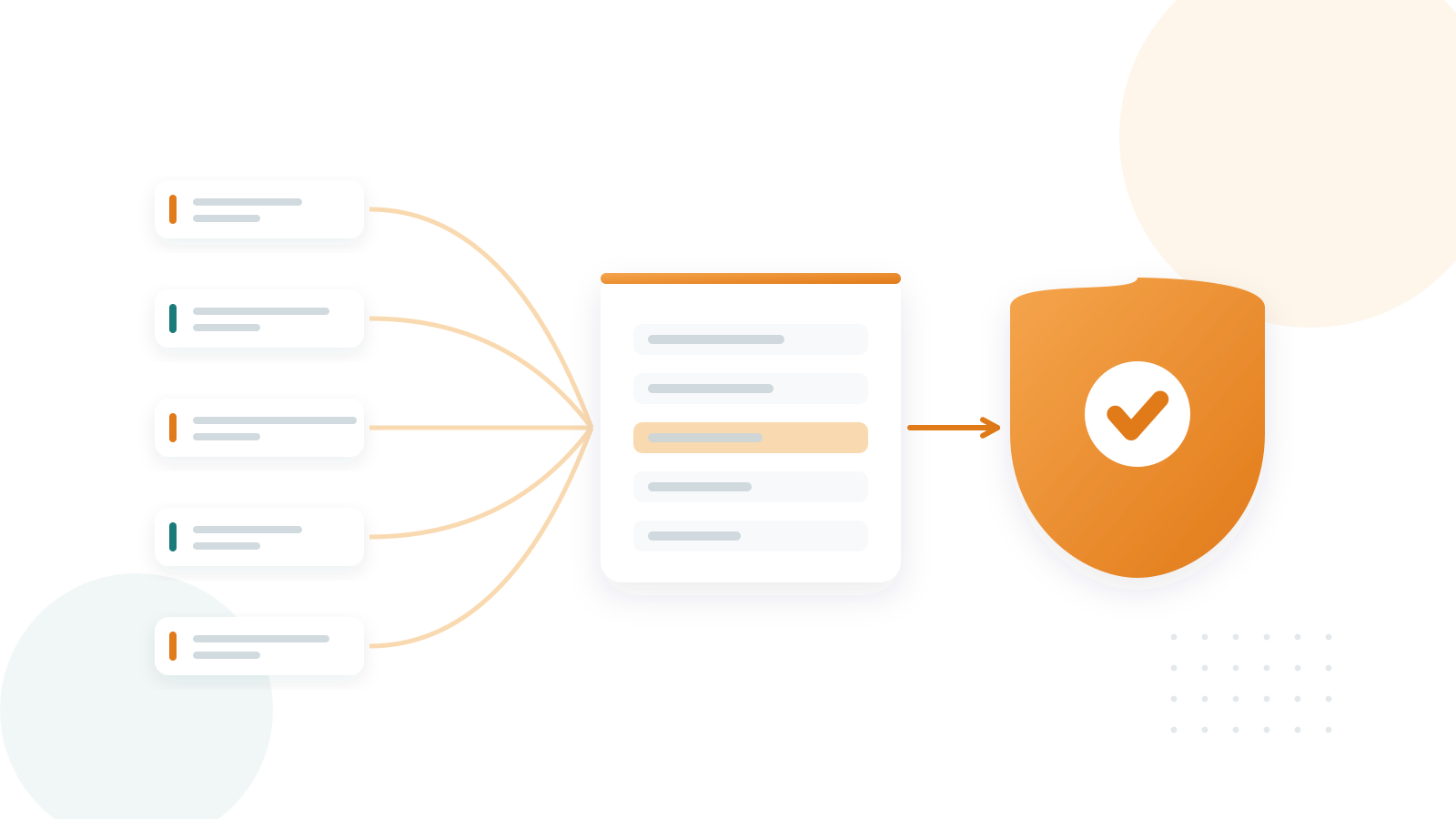
Instead of shipping logs to a proprietary black box, bring the analytics to the data. Standardize on OCSF, the Open Cybersecurity Schema Framework, and normalize every incoming signal before it reaches a dashboard. That normalized store is what the market now calls a security data fabric, and Databricks plus disciplined data engineering produces one immutable record of truth underneath it.
Tens of thousands of remote laptops emit millions of signals a day. A centralized lakehouse ingests, normalizes, and queries that volume without breaking a sweat. Run the AIM-IT Framework across your security operations: assess the telemetry you have, innovate the pipeline design, model the schema, implement one ingestion path, and track what changes.
Structuring the Medallion Architecture for Threat Intelligence
The gap between demo-grade and production-grade AI is data quality. Threat detection on messy data produces confident nonsense. The medallion architecture closes that gap.
It starts at the Bronze layer. Databricks Auto Loader ingests raw security logs, firewall events, and identity telemetry exactly as they arrive. Nothing gets reshaped here. Bronze is the historical record of every event, and because storage is cheap object storage rather than metered SIEM ingestion, you keep the sources you used to discard.
Silver comes next. Lakeflow pipelines clean, filter, and normalize those logs into the OCSF standard. AUTO CDC tracks state changes in user permissions and asset configurations over time. This layer carries your data security posture management work, and it keeps every record standardized and searchable.
Gold is the payoff. These refined, aggregated views serve security analysts and BI tools directly. One gold view summarizes failed authentication attempts by department over 24 hours. Unity Catalog governs it, so you enforce row-level and column-level security, and analysts and agents alike see only what they are cleared to see.
The Shift Toward Agentic AI Security Workflows
Consolidate the telemetry and the lakehouse starts paying a second dividend. You build agentic AI security workflows on a governed foundation instead of on guesswork.
Using the Foundation Model API inside Databricks, security teams deploy agents that query the gold layer in plain English. An analyst asks the agent to map an attack path rather than hand-writing SQL against a dozen disconnected stores. That is the practical version of an autonomous SOC: not a marketing slide, but LLM threat hunting against records that were already standardized before the model ever saw them.
The agent reads the single source of truth, pulls the standardized OCSF records, and returns a full timeline. Unity Catalog logs which agent touched which table, which is the difference between an AI SOC you can audit and shadow AI you cannot. That is process-first AI. It removes the manual labor of incident response and frees your best engineers for structural work.
Own Your Security Telemetry or Keep Renting It
The decision comes down to one question. Who controls your data?
Keep buying isolated point tools and legacy SIEMs and you keep renting access to your own evidence. You pay per gigabyte to store it, you drop the logs that do not fit the invoice, and you pay analysts to correlate what is left by hand across a dozen screens.
Centralize on a Databricks lakehouse and you own the telemetry outright. One source of truth, no duplicate compute spend, and a foundation that carries XDR consolidation, SIEM replacement, and automated threat hunting on the same governed tables.
Pick the version you can still defend in a board meeting two budget cycles from now. If that is the second one, start your pipeline consolidation build with our engineering team and put your raw telemetry under your own governance.
Frequently Asked Questions (FAQs)
What is a gold layer in a security context?
A gold layer is the refined, aggregated tier of a medallion architecture. In security, it holds clean, standardized logs that are ready for analysis, reporting, and automated detection without further cleanup.
How does a lakehouse reduce security tool sprawl?
A lakehouse centralizes all telemetry in one storage environment. You parse and store each log once, which removes the need to buy and maintain redundant tools doing identical work, and it ends the habit of dropping useful sources to control ingestion billing.
What is the difference between XDR, a legacy SIEM, and a centralized lakehouse?
XDR correlates endpoint, identity, and cloud signals inside one vendor’s product boundary, so your coverage stops where their integrations stop. A legacy SIEM centralizes logs but meters you on ingestion volume, which pressures teams to send less data. A lakehouse stores every signal once in open formats under Unity Catalog and runs detection, investigation, and reporting on those same tables. Teams with a regulatory or contractual dependency on a named SIEM typically keep a thin alerting layer and move the heavy analytics to the lakehouse.
How does a security data lakehouse enable an AI-driven SOC?
An AI SOC needs consistent, governed data more than it needs a better model. Once every log is normalized to OCSF in the silver layer and aggregated in gold, agents built on the Foundation Model API query that history directly, run LLM threat hunting against standardized records, and return a timeline instead of a guess. Unity Catalog records what each agent read, so the automation stays auditable.
What role does Unity Catalog play in data security posture management?
Unity Catalog governs every data asset in one place. It enforces access controls, audits lineage, and keeps sensitive security logs restricted to authorized personnel and approved agents.