I’ve spent 30 years dragging mathematical models out of slideware and into live operations, from Air Force flight operations to Fortune 500 plant floors. The first time I watched a silver layer fail silently because someone ran one cell out of order, the lesson landed hard. Exploratory code is not production software.
That gap shows up every week on the Databricks lakehouse. Work that runs beautifully in an interactive session breaks the moment it has to run on a schedule, in another workspace, against a source system that changed overnight. McKinsey’s State of AI research reports that more than 80 percent of organizations see no material effect on enterprise-level EBIT from their generative AI work, and Gartner has forecast that at least 30 percent of generative AI projects are abandoned after proof of concept. The model is rarely the defect. The delivery discipline is.
You have two ways to ship work on the lakehouse. The Databricks Asset Bundles (DABs) vs notebooks choice decides whether your pipelines become dependable assets or brittle liabilities.
Where Exploration Breaks Down in Production
Interactive-only teams build workflows with no governance underneath them. Code sits in fragmented cells. Execution state is untraceable. Shipping a medallion architecture becomes manual orchestration by whoever remembers the run order.
Three specific snags show up in that handoff. Teams still deploying out of Databricks Repos have to re-express workspace-attached folders as declarative bundle configuration. Databricks CLI authentication has to move off personal access tokens and onto OAuth service principal credentials held as CI secrets, or production stays tied to whoever first set it up. And Delta Live Tables (DLT) definitions have to be versioned next to the jobs that trigger them, or a rollback restores the job and leaves the pipeline running yesterday’s logic.
The damage compounds fast. Teams bolt version control and tests onto ad hoc scripts, release cycles stretch, and the business quietly stops trusting the numbers. Draw the boundary early. One lane for fast discovery. One lane for controlled implementation.
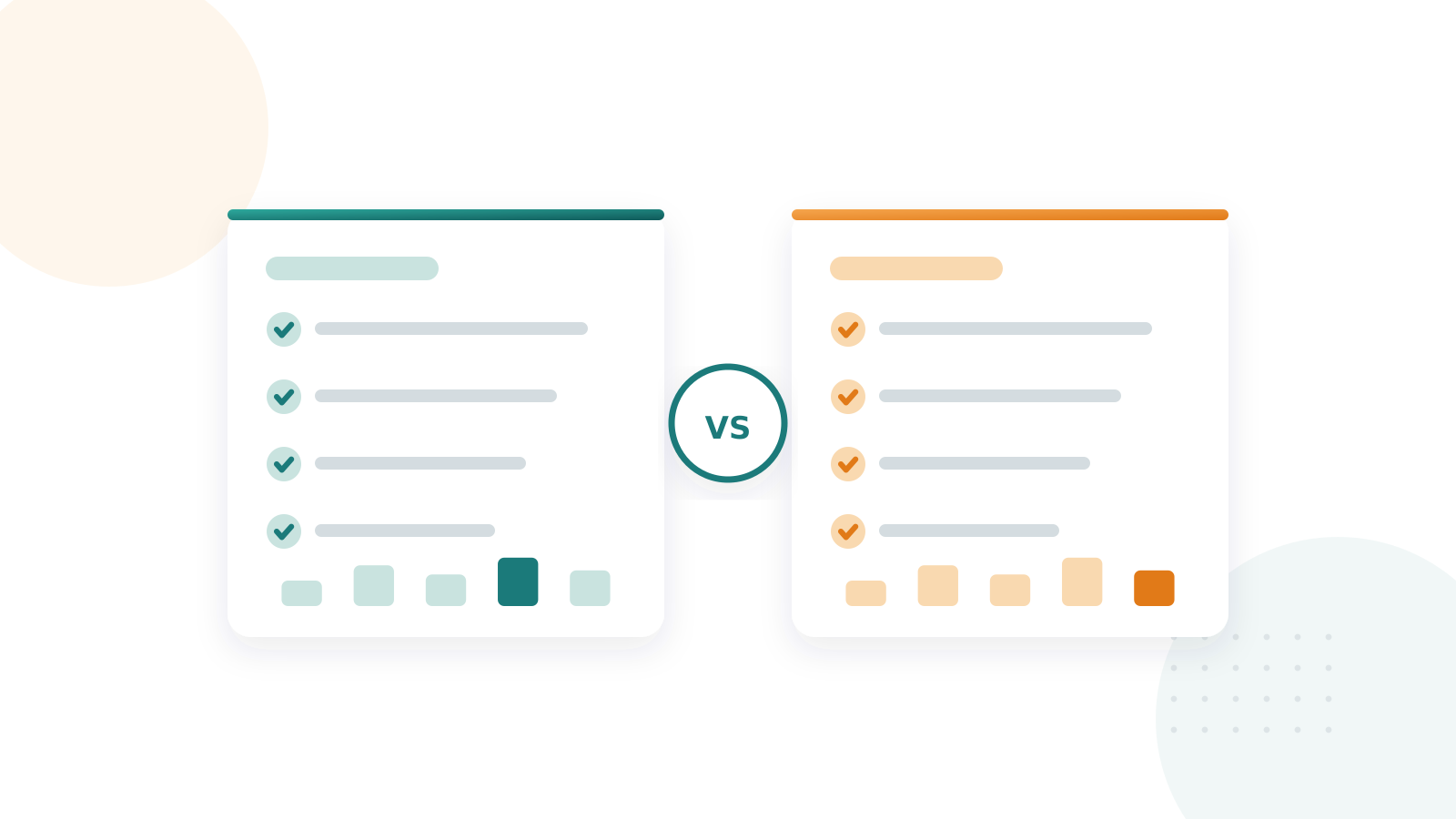
Asset Bundles vs Notebooks at a Glance
Here is how the two native options compare, and how we deliver them.
| Option | Best for | Governance and version control | Pricing |
|---|---|---|---|
| Analytics AIML | Teams standardizing lakehouse delivery end to end | Git-backed bundles plus Unity Catalog permissions defined in code | Custom engagement by scope |
| Databricks Asset Bundles (DABs) | Scheduled production jobs and DataOps CI/CD | YAML in source control with dev, staging, and production targets | Included in Databricks platform consumption |
| Databricks Notebooks | Exploration, profiling, and ad hoc analysis | Revision history and Git folders, thinner CI/CD support | Billed on compute consumed |
Analytics AIML
We build and run our own lakehouse tooling. Every pipeline, Auto Loader job, and orchestration pattern we recommend is something we have shipped ourselves, usually twice, because the first version taught us something. Our work pairs lakeflow + process improvement with databricks + first principles thinking.
Best for: Enterprise data leaders moving from scattered scripts to production-grade lakehouse pipelines.
Pricing: Custom implementation engagements scoped by project size and operational complexity.
Standout features: We run the AIM-IT Framework (Assess, Innovate, Model, Implement, Track) on every build, so the pipeline matches how the operation actually works. Process-first AI mechanics govern the full data lifecycle, from bronze ingestion to gold-layer access.
Advantages:
- Databricks + data engineering delivered as one practice, not two handoffs.
- Practitioner-led delivery grounded in Fortune 500 operating experience.
- Focus on production reality instead of demo-grade builds.
Databricks Asset Bundles (DABs)
Asset bundles bring software engineering standards to lakehouse projects. You express jobs, pipelines, and workflows as YAML, commit that configuration to Git, and deploy it through targets for development, staging, and production. What runs in the workspace is what passed your CI pipeline.
The payoff is boring, and boring is the point. The same bundle deploys the same way in September that it did in March.
Best for: Scheduled production workloads, DataOps and MLOps automated CI/CD pipelines, and teams that need real control over deployments.
Pricing: No separate license. You pay standard Databricks platform consumption for the compute the bundle runs.
Standout features: Infrastructure as Code (IaC) native to the platform via the Databricks CLI, per-environment deployment targets, service principal ownership of production jobs, and clean integration with Git and external CI/CD tooling.
Advantages:
- Reproducible deployments with full version history for mission-critical pipelines.
- Removes configuration drift between development and production environments.
- Scales a growing data team without scaling tribal knowledge.
Disadvantages:
- Analysts new to YAML and Infrastructure as Code face a real learning curve.
- Adds overhead during early exploration, when the data shape is still unknown.
Databricks Notebooks
Notebooks are the interactive front door. You write SQL, Python, R, or Scala, run a cell, and see the result and the chart immediately. For profiling a bronze table or sanity-checking a silver join, nothing beats that feedback loop.
I still start there. Every build we do starts in a notebook, because you cannot design a pipeline for data you have never looked at.
Best for: Exploratory analysis, prototyping, ad hoc reporting, and collaborative data science.
Pricing: Billed on the compute consumed while the notebook runs.
Standout features: Multiple languages in one document, real-time collaboration, inline visualizations, and Git folder support for source control.
Advantages:
- Fastest path from a question to an answer against live lakehouse data.
- Strong for showing stakeholders the shape of the data, not just a summary of it.
- Low barrier for analysts moving into the lakehouse.
Disadvantages:
- Hidden state. Cells run out of order produce results nobody can reproduce.
- Harder to wrap in automated testing and deployment than code-based assets.
What Unity Catalog Changes About the Decision
Unity Catalog centralizes access control, auditing, and lineage across workspaces. How you touch it depends on which path you pick.
With asset bundles, you declare permissions, schemas, and job ownership in configuration, then deploy it with the Databricks CLI from your DataOps pipeline. A production service principal holds write access to gold-layer tables, and no human account does. Notebooks run under interactive user permissions, which is the right setup for read-only exploration across bronze and silver. Mature teams run both, with exploration isolated from write workloads.
Running the Medallion Architecture Across Environments
Bronze is where notebooks earn their keep. Raw data lands from source systems, and someone has to profile it, catch schema drift, and write the first validation rules.
Silver and gold demand predictability. Streaming ingestion, AUTO CDC, and SEQUENCE BY logic need the same cluster settings, retry behavior, and dependency order on every run. Package that in a bundle, and package the Delta Live Tables pipeline definitions with it so the transformation logic and the schedule move as one unit. The handoff point is simple: the moment another team reads your output, the notebook stops being the deployment mechanism.
Process Discipline Beats Tooling
Tools do not fix data quality. Measurement and control do. Notebooks belong to the innovate and model phases, where you test hypotheses and throw most of them away. Bundles belong to implement and track, where you lock the working process down so it runs without a human babysitting it.
Skip that distinction and you ship a prototype into an operational workflow. I have cleaned up that decision more than once, and the cleanup always costs more than the discipline would have.
Draw the Line Before Your Next Scheduled Run
Stay in notebooks while you still do not know the shape of the data. Move to asset bundles the moment the code has to run on a schedule. If a business unit makes a daily decision on that output, it needs version control, automated tests, isolated environments, and a service principal that owns the job. There is no third answer, and postponing the call is choosing the fragile one.
If your pipelines keep failing, audit the deployment discipline before you audit the code. That is where the defect usually lives. When you are ready to move fragile scripts onto a governed lakehouse foundation, reach out to our team and bring your three worst-behaving jobs to the first call.
Frequently Asked Questions (FAQs)
What is the main difference between Databricks Asset Bundles and Notebooks?
Notebooks are an interactive environment for exploration and prototyping. Asset bundles are a deployment framework that packages jobs and pipelines as version-controlled configuration and ships them through CI/CD.
How do Databricks Asset Bundles (DABs) and the Databricks CLI improve DataOps governance?
They put cluster settings, job schedules, permissions, and pipeline dependencies into source control, and the Databricks CLI deploys that configuration from your build system. Every change is reviewable, testable, and applied by automation instead of by hand in a workspace.
Can you use Notebooks for production data engineering?
You can, but do not do it for anything the business depends on. Notebooks lack native unit testing, continuous integration, and environment isolation, so they break when source schemas shift.
Can you deploy Delta Live Tables (DLT) using Databricks Asset Bundles?
Yes. A bundle can declare DLT pipeline resources alongside the jobs, clusters, and permissions that surround them, so the pipeline definition and its trigger deploy together to dev, staging, and production from one versioned source.
What is the AIM-IT Framework in data deployment?
AIM-IT stands for Assess, Innovate, Model, Implement, and Track. It is our methodology for pairing process-first AI mechanics with databricks + data engineering, so pipelines match how the operation actually runs.